
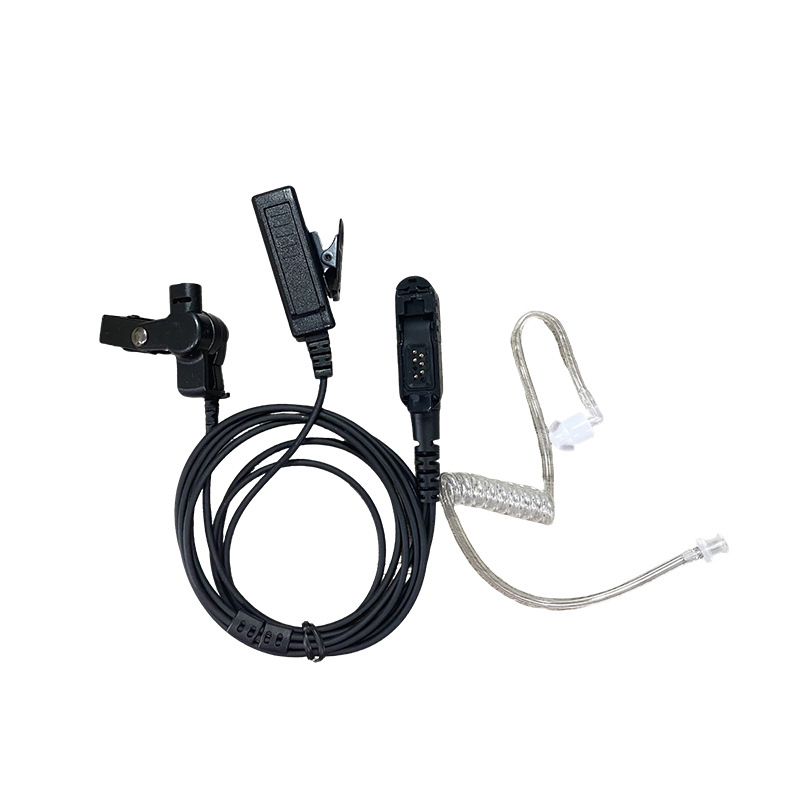
Motorola two-way radios are widely used in security, hospitality, retail, construction, transportation, manufacturing, and event management. While the radio itself is essential for reliable communication, choosing the right earpiece or headset can make a significant difference in comfort, audio clarity, privacy, and daily work efficiency.
For security teams, a discreet surveillance earpiece may be the best option. For warehouse employees, a durable headset with a push-to-talk (PTT) button may be more practical. Meanwhile, radio repair shops and distributors need to offer different audio accessories to meet the needs of their customers.
With so many options available, how do you choose the right Motorola radio earpiece or headset?
In this guide, MOYSAR.NET explains the main types of Motorola two-way radio audio accessories, important compatibility factors, and practical purchasing tips for individual users, repair shops, and distributors.
1. Understand the Different Types of Motorola Radio Earpieces and Headsets
Before purchasing Motorola radio earpieces and headsets, it is important to understand the main product types and how they are used.
Surveillance Earpieces
Surveillance earpieces are designed for discreet communication. Many models feature a transparent acoustic tube and a compact earbud, allowing users to hear incoming transmissions without drawing unnecessary attention.
They are commonly used by:
- Security guards and loss-prevention teams
- Hotel and hospitality employees
- Event security personnel
- Retail staff
- Reception and customer-service teams
Some surveillance kits include an in-line microphone and PTT button, while others use different wiring configurations. The right choice depends on the radio model and the user’s working requirements.
For security companies looking for compatible Motorola radio accessories, surveillance earpieces are an important category to consider.
D-Style Earpieces
D-style earpieces feature an ear hook that rests around the outer ear. This design can provide a more secure fit than a standard earbud for some users.
They are useful for employees who need to communicate frequently throughout a shift. Depending on the model, a D-style earpiece may include an in-line microphone, PTT button, or receive-only functionality.
Before ordering, check whether the product supports two-way communication or only audio reception.
Over-the-Ear and In-Ear Headsets
Over-the-ear headsets and in-ear headsets offer different levels of comfort, stability, and environmental awareness.
- Over-the-ear headsets: Useful for users who prefer a headset that sits around or over the ear.
- In-ear headsets: Compact and lightweight, making them suitable for everyday communication.
- Single-ear headsets: Allow users to hear radio transmissions while remaining aware of surrounding conversations and activity.
The best option depends on how long the accessory will be worn, the noise level of the workplace, and the user’s personal preferences.
Heavy-Duty Headsets
Heavy-duty headsets are designed for demanding work environments, including construction sites, industrial facilities, and manufacturing operations.
Depending on the model, they may include a padded headband, noise-reducing microphone, reinforced cable, or specialized hearing-protection features.
Do not assume that every heavy-duty headset provides certified hearing protection. Check the manufacturer’s specifications and certification requirements before using a headset in a hazardous-noise environment.
2. Check Compatibility with Your Motorola Radio Model
Compatibility is one of the most important considerations when purchasing Motorola two-way radio headsets.
Not every Motorola earpiece works with every Motorola radio. Different product families may use different connectors, audio interfaces, and accessory configurations.
Before placing an order, identify the exact radio model.
Common Motorola radio families include:
| Motorola Radio Series | Examples of Models |
| CP Series | CP200, CP200d, CP100d |
| MOTOTRBO XPR Series | XPR3300e, XPR3500e, XPR7350e |
| MOTOTRBO R Series | R2, R5, R7 |
| SL Series | SL300, SL3500e, SL7550e |
| TLK Series | TLK100 and selected TLK models |
| Professional and Legacy Series | GP328, GP338, PRO5150 |
This list is intended as a starting point, not a statement that one earpiece fits every model in a series.
For example, an earpiece designed for a 2-pin accessory interface should not automatically be assumed compatible with a radio that uses a different connector or accessory interface.
Always verify the exact radio model, connector type, and accessory part number before purchasing.
For repair shops and distributors, recording compatibility information alongside each product SKU can help reduce returns and make product recommendations more accurate.
3. Choose the Right Connector and PTT Configuration
Even if two earpieces look almost identical, their connectors and electrical configurations may differ.
Before purchasing a replacement earpiece, check the following details.
Connector Type
Motorola radios use different accessory interfaces across product families. Depending on the model, an earpiece may use a multi-pin connector, a 2.5 mm or 3.5 mm audio connection, or a specialized accessory interface.
Do not select an earpiece based on connector appearance alone. Confirm that the accessory is specifically designed for the radio model.
Push-to-Talk Function
A PTT button allows users to transmit without reaching for the radio itself.
Common configurations include:
- In-line PTT button on the earpiece cable
- Microphone and PTT integrated into the headset
- Remote PTT accessories
- Receive-only earpieces without a transmit microphone
Security teams and retail workers often prefer in-line PTT because it allows quick communication while keeping the radio attached to a belt or uniform.
Microphone Placement
The microphone position affects ease of use and voice pickup. Some products place the microphone along the cable, while other headsets position it near the mouth.
For users working in noisy environments, check whether the microphone is designed to reduce background noise.
4. Consider the Working Environment
The right Motorola compatible earpiece depends on where and how the radio is used.
Security and Loss Prevention
Security personnel often need discreet communication and convenient PTT access.
Recommended features may include:
- Transparent acoustic tubing
- Compact earpieces
- In-line microphone and PTT
- Secure cable routing
- Replaceable ear tips or acoustic tubes
A surveillance kit can be a practical option for retail security, hotel security, and event operations.
Hotels, Restaurants, and Retail Stores
Employees in hospitality and retail often communicate while interacting directly with customers.
Lightweight D-style or single-ear headsets may be suitable because they allow employees to hear radio traffic while remaining aware of nearby conversations.
Comfort is especially important for employees who wear an earpiece for an entire shift.
Warehouses and Manufacturing Facilities
Warehouse and manufacturing workers may prioritize durability, stable fit, and clear audio.
Look for accessories with suitable cable construction, secure connectors, and a microphone designed for the intended noise conditions.
Where hazardous noise is present, select equipment based on the workplace’s hearing-protection requirements rather than appearance alone.
Outdoor and Construction Work
Outdoor users may encounter dust, moisture, vibration, and rough handling.
Choose accessories with suitable environmental ratings where available, and check the manufacturer’s instructions for cleaning and maintenance.
An accessory’s environmental rating should not be assumed to match the radio’s own protection rating.
5. Prioritize Comfort for Long Shifts
Comfort is easy to overlook when comparing prices, but it can determine whether employees are willing to use an earpiece throughout the day.
When evaluating Motorola radio earpieces and headsets, consider:
- Weight and overall size
- Earbud or ear-hook design
- Cable length and flexibility
- Pressure around the ear
- Availability of replacement ear tips
- Ease of cleaning
- Whether the design suits left-ear or right-ear use
For businesses with multiple radio users, providing two or three suitable styles can be more effective than choosing a single accessory for everyone.
Repair shops can also ask customers how long they wear their radios and whether they prefer an earbud, ear hook, or headset before recommending a replacement.
6. Original vs. Compatible Motorola Radio Earpieces
When purchasing audio accessories, buyers may compare original Motorola products with third-party compatible alternatives.
Original accessories may be preferred when a buyer needs a specific manufacturer-approved configuration. Third-party compatible products can provide additional sourcing options and may help businesses manage replacement costs.
For companies purchasing in volume, affordable compatible Motorola radio accessories may be worth evaluating, especially for commonly replaced items such as earpieces, acoustic tubes, ear tips, and cable assemblies.
Before choosing a third-party product, check:
- The exact radio models supported.
- The connector and PTT configuration.
- Audio performance and microphone specifications.
- Cable construction and overall build quality.
- Product warranty and supplier support.
- Any certification required for the intended application.
Compatibility claims should be supported by the supplier’s product specifications or testing rather than assumed from a similar-looking connector.
For MOYSAR.NET customers, matching the right product to the intended radio is an essential part of choosing a reliable replacement accessory.
7. Common Motorola Earpiece and Headset Buying Mistakes
Avoiding a few common mistakes can save time and reduce unnecessary returns.
Mistake 1: Buying based only on the brand name.
A product described as “for Motorola radios” may not fit every Motorola model. Always check the exact radio series and accessory interface.
Mistake 2: Ignoring PTT functionality.
Some earpieces are receive-only, while others support two-way communication. Confirm that the product includes the functions required for the job.
Mistake 3: Choosing the cheapest option without checking specifications.
Low purchase cost does not always mean lower total cost. Poor fit, weak cables, or an incompatible connector can lead to repeated replacements.
Mistake 4: Overlooking replaceable components.
For surveillance earpieces, acoustic tubes and ear tips may wear out before the main unit. Choosing products with available replacement components can help reduce long-term maintenance costs.
Mistake 5: Ordering in bulk before testing.
Repair shops and distributors should consider testing a sample batch before placing a large order, especially when introducing a new compatible accessory.
8. Recommended Earpiece Inventory for Radio Repair Shops and Distributors
If you operate a two-way radio repair shop or accessories business, consider stocking several categories rather than focusing on only one style.
| Inventory Category | Target Customers | Key Selection Criteria |
| Surveillance kits | Security companies and event staff | Discreet design, correct PTT and connector |
| D-style earpieces | Retail, hospitality, and general business users | Comfort and secure fit |
| Single-ear headsets | Warehouse and commercial users | Audio clarity and durability |
| Heavy-duty headsets | Industrial and construction users | Noise requirements and robust construction |
| Replacement acoustic tubes | Surveillance earpiece users | Exact compatible kit |
| Replacement ear tips | Frequent earpiece users | Size, material, and hygiene |
| Spare audio cables and PTT accessories | Repair shops | Exact model and interface compatibility |
Keeping commonly requested accessories in stock can help repair businesses respond more quickly to customer needs.
For distributors, clearly organized compatibility lists and accurate product descriptions can also make online sales and customer support more efficient.
9. Why Buy Compatible Motorola Audio Accessories from MOYSAR.NET?
MOYSAR.NET is an independent third-party radio accessories website serving repair shops, resellers, distributors, and commercial radio users.
Our focus is on practical replacement solutions for Motorola two-way radios, including compatible accessories for customers looking for additional options beyond original equipment.
When sourcing Motorola two-way radio accessories, buyers should prioritize accurate compatibility information, consistent product quality, and responsive supplier support.
Whether you need surveillance earpieces, D-style headsets, replacement acoustic tubes, or other audio accessories, start by identifying the exact radio model and the functions required for your working environment.
For repair shops and distributors, a well-organized range of compatible audio accessories can help meet different customer requirements while supporting more cost-effective inventory planning.
Conclusion
Choosing the right earpiece or headset for a Motorola two-way radio involves more than selecting a comfortable design. Buyers must consider radio compatibility, connector type, PTT functionality, microphone placement, workplace conditions, and long-term durability.
Surveillance earpieces are useful for discreet communication, D-style earpieces suit many everyday business applications, and heavy-duty headsets may be appropriate for demanding environments when selected to meet the relevant requirements.
For repair shops, distributors, and commercial users, the best approach is to verify compatibility before purchasing and choose accessories based on actual working needs.
Explore MOYSAR.NET for practical options in compatible Motorola radio accessories, and select the right audio solution to support reliable communication throughout the working day.